Case study
Sky Bet: making compulsory email verification feel effortless
Sky Bet needed to introduce mandatory email verification at sign-up to prevent bonus fraud and meet upcoming payment regulations, without giving customers a reason to drop off before they'd even placed a bet.
The problem
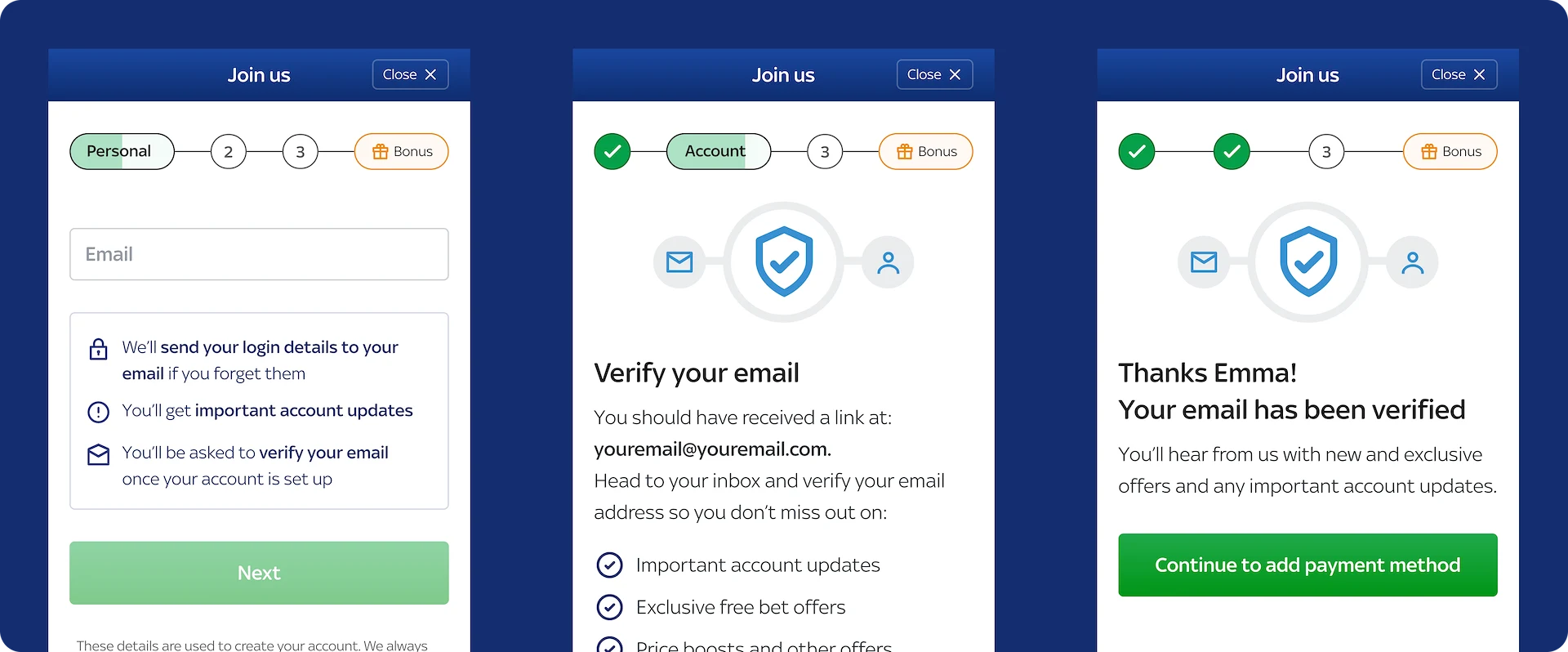
Email verification was becoming compulsory: needed to stop bonus fraud from invalid sign-ups, comply with incoming payment regulations, and make sure customers actually received their offers and account information. The challenge was making a non-negotiable requirement feel like a natural part of onboarding rather than a hurdle.
Process
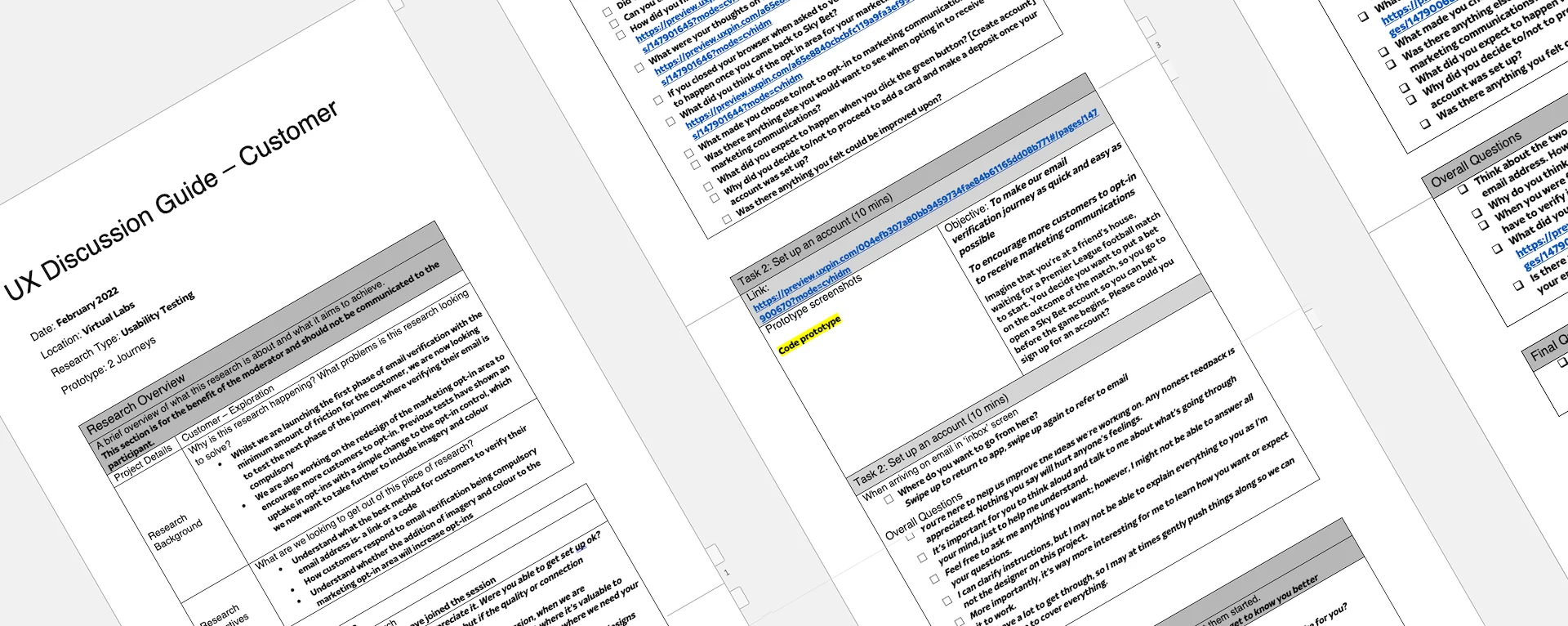
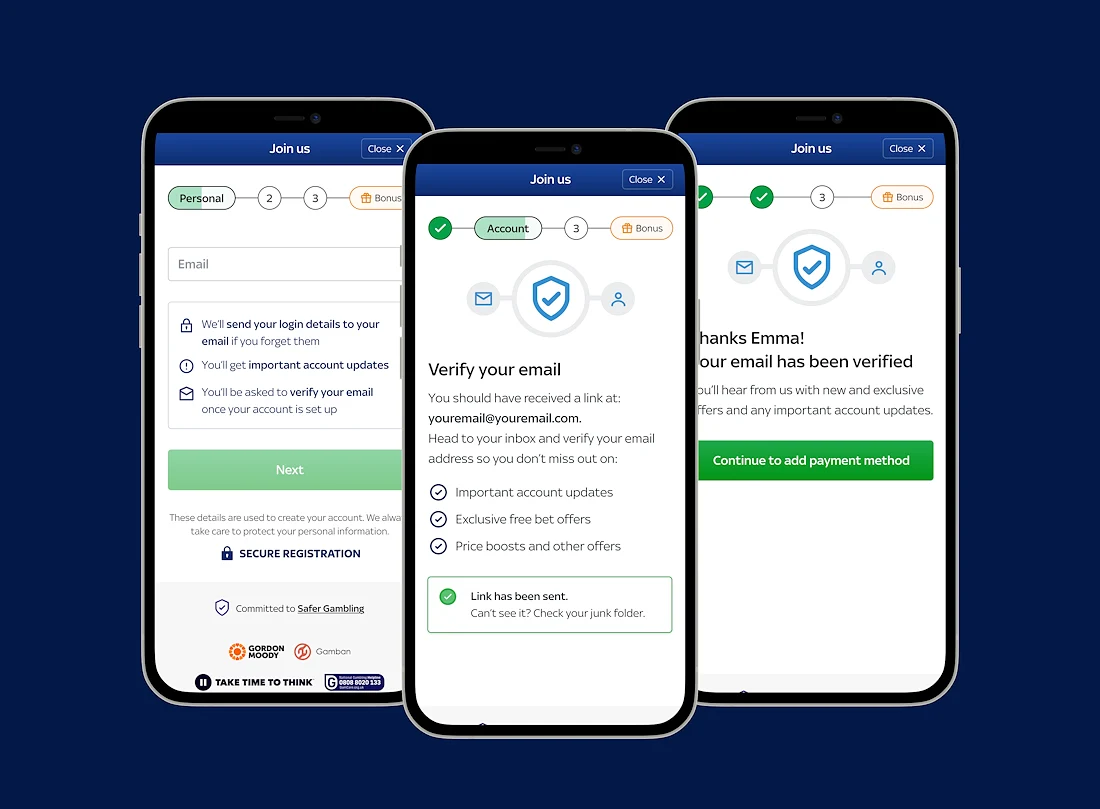
Prototyping. Working in UXPin, I built two verification approaches (one code-based, one link-based) to test two hypotheses: that explaining the benefit of verifying would increase acceptance, and that a code would be easier for customers than a link.
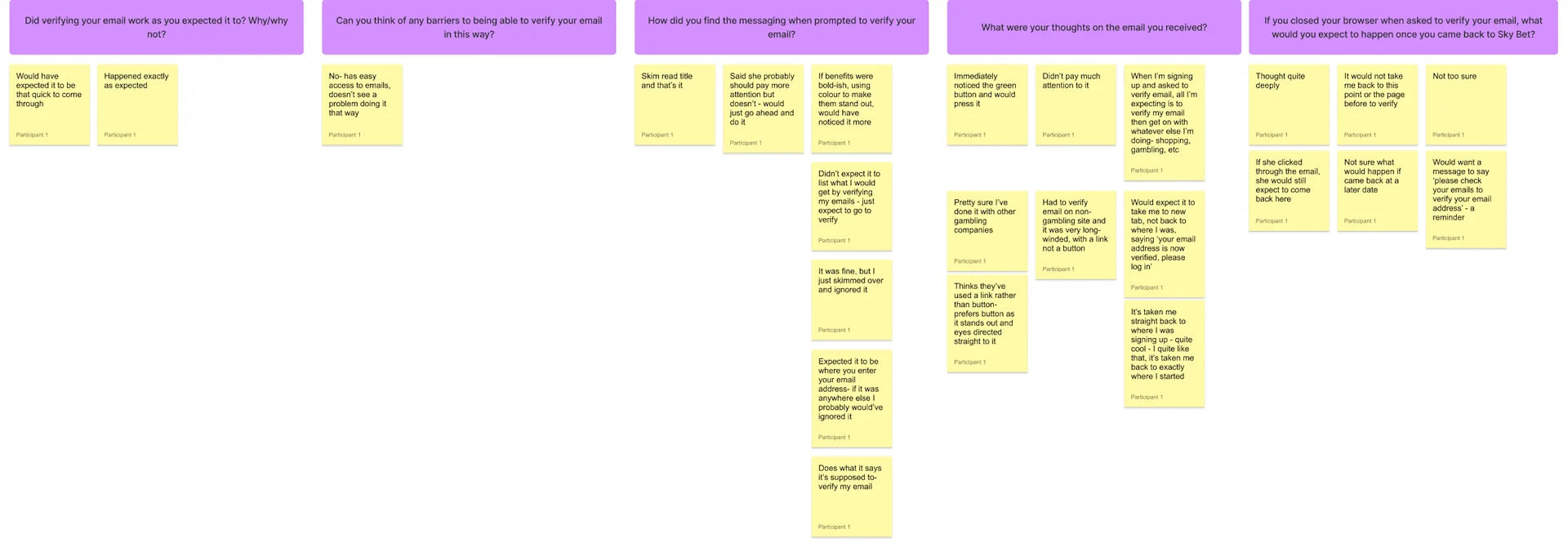
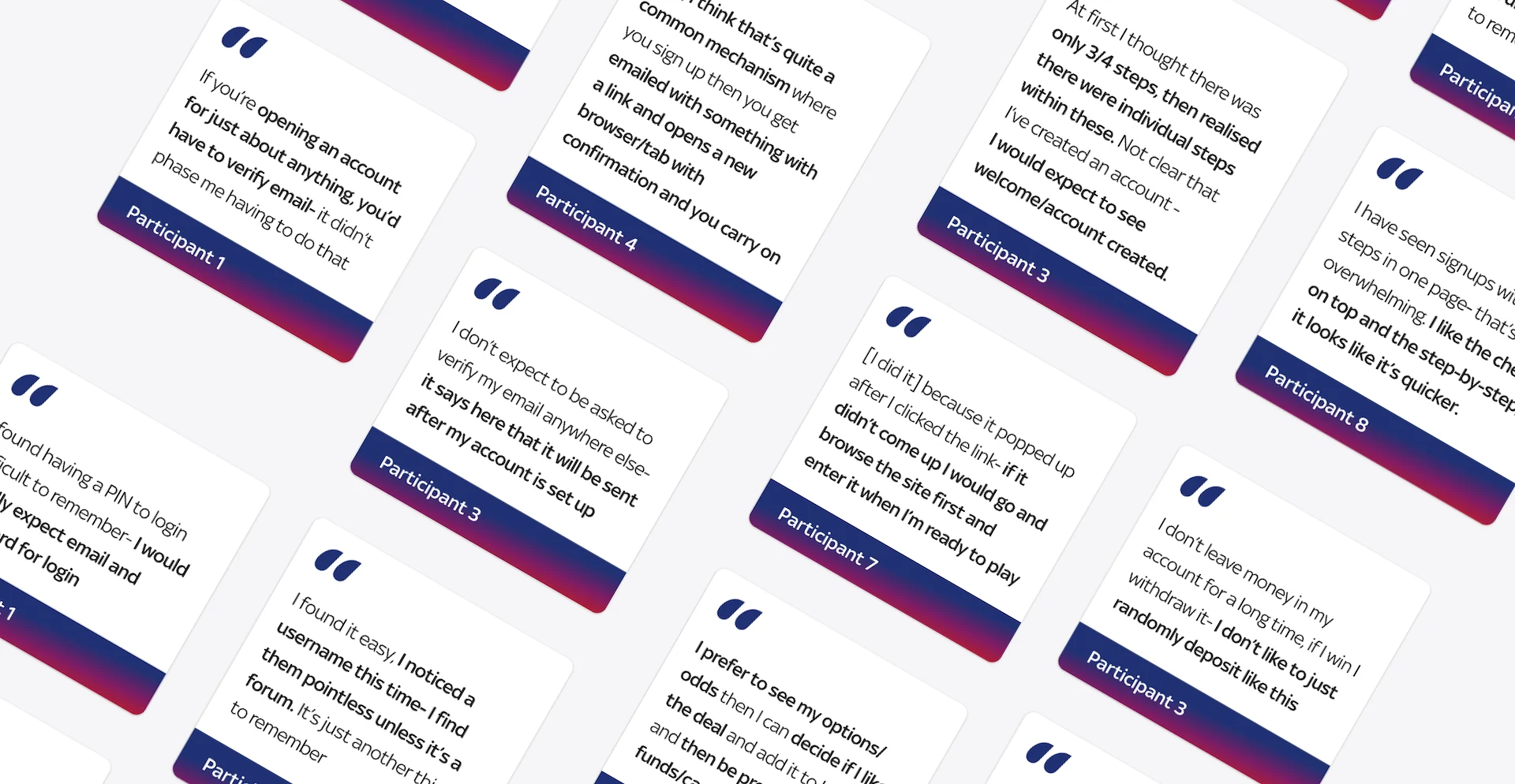
Research. Alongside a Senior Product Designer, I ran eight moderated interviews with existing gamblers (not existing Sky Bet customers) over User Testing and Zoom.
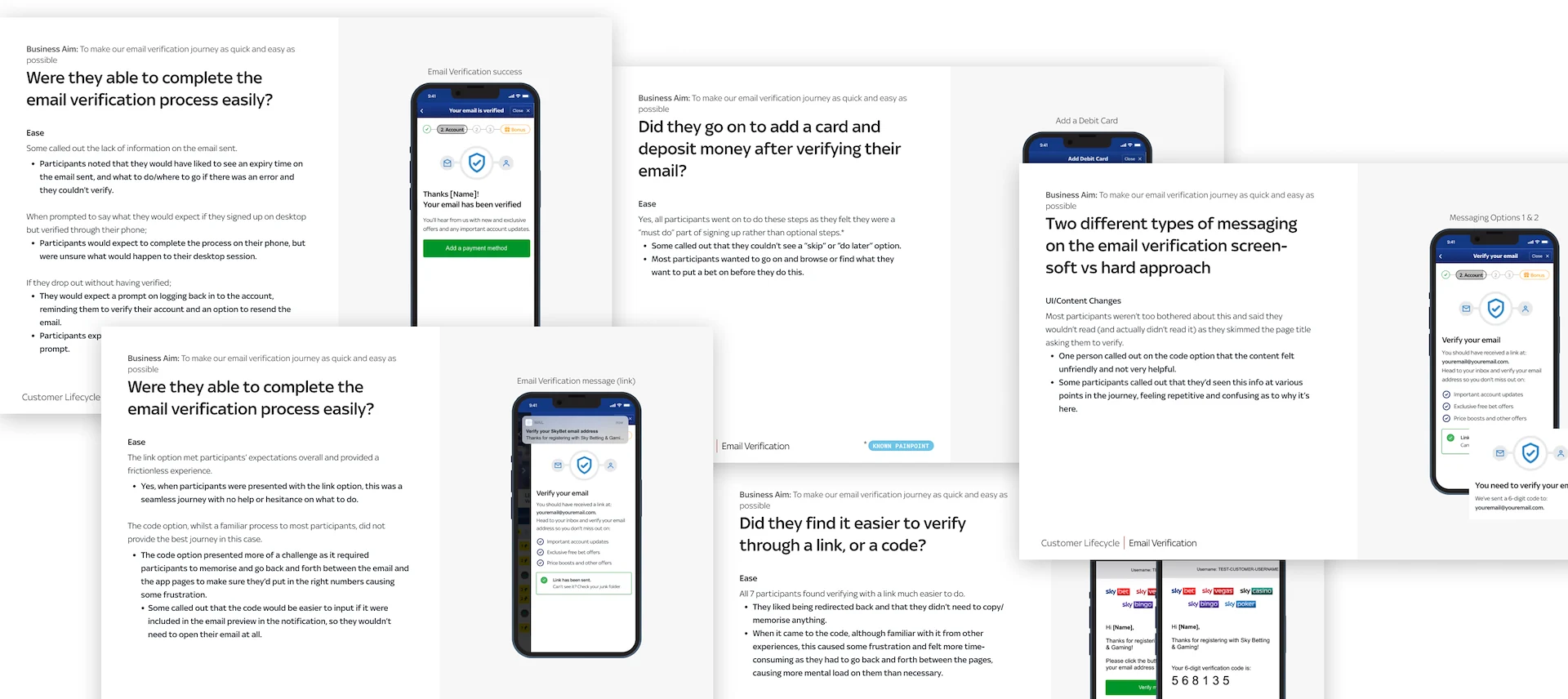
Both hypotheses were disproven. Customers largely ignored benefit-messaging shown at the point of entering their email, and most preferred a link over a code. They also expected a reminder after logging in if they hadn't verified yet, wanted an easy way to resend the email, and wanted clearer confirmation once verification had succeeded. For most, the step felt expected anyway; it matched what they'd experienced on other sites. Along the way, the research also surfaced several broader onboarding friction points that echoed concerns we'd flagged before.
Outcome
The findings shaped a phased rollout: a lower-friction MVP designed to minimise churn risk, with a more deliberately "frictive" version planned for later, requiring verification to be complete before a payment method could be added. The MVP was built to capture error rates, verification completion, and time-to-verify, feeding real data into the next iteration rather than guesswork.